This isn't a full blog post but a series of small ones about individual points of directorial decision in STBY. Here goes:
Racial Makeup of WorryFree: We know WorryFree's advertisements and "tours" don't give the full story. Every ad they had (minus one or two, maybe?) featured smiling white people, not black people given no choice. Despite their claims of being a choice, WorryFree really ends up being a last resort. (Anyone with plural brain cells kind of realizes that they'd rather live freely if given the option.) Cassius' uncle is a perfect example: going bankrupt leaves him limited options, and he would choose WorryFree over jail or homelessness. In this way, WorryFree is likely a blacker institution, as African-Americans are statistically far poorer than other races. But of course, the advertising doesn't paint itself as a last resort, so it shows off white people who chose to be there.
Activator as cocaine: We discussed this briefly in class, and it reminds me a lot of a scene in the music video for Public Enemy's Night Of The Living Baseheads. In the scene (2:19, but also check out the rest of the video because it's great) the reporter looking for "baseheads" (that is, crackheads, people addicted to crack) bursts into a wall street office and finds well-dressed white executives doing lines of cocaine. In a sense, these people are the same as the crack-afflicted "baseheads" in black communities. The only difference is the form of the cocaine. As for why it's in a spiral, or why Lift snorts a line two or three feet long: I think those are just one-off gags for cartoonish effect. This movie has a lot of those. I wonder how the WorryFree people are given the cocaine? I feel like I would be suspicious if I was in this forced commune and was offered cocaine. I worry about the internal systems of WorryFree in general though.
Why Horses? and are all the horse people black? We had a very limited pool of horse-people to choose from, but several were black. And with Riley's political commentary throughout this movie, it makes sense that they would be. A few details lend themselves to this theory: First, as Mitchell said, capital gain has been made off the backs of black men for a very long time. You could also say that capital gain has been made off the backs of horses for a very long time. You could also say that black men have been worked like horses to create capital gain for a long time. The connection makes sense. Another thing: black men have been stereotyped to be bigger and stronger than white men. Horses are strong animals. It also makes sense to turn your workers into the strongest animal possible. As for the horse-people we met, there's a higher possibility they were black simply due to the fact that more people at WorryFree are black (see my first paragraph). It's implied that many of them are black due to the fact that Cassius (a black man) is chosen to be their "Martin Luther King Jr," another black man. Why couldn't he be their Ghandi, or their Emma Goldman (besides the fact that MLK is the most recent, popular example of nonviolent peace leader for oppressed group)?
The VIP Room: Remember near the beginning of the movie when Cassius sees the VIP room in the bar, Salvatore tells him the password (which he knows for some reason), and he goes in only to be elbowed and splashed and not enjoy it at all? Yeah, I still don't know what that was about. Maybe "people not at the top get pushed around in areas of prestige"? Maybe a quasi-dream sequence representing his anxiety about his low-paying position? That's a big question I still have about this movie. Also Squeeze. What's Squeeze's deal??
December 21, 2018

December 10, 2018
Complete and total Colorblindness at all-white (minus a few) Mestizo Mulatto Mongrel Elementary
One of my favorite riffs in White Boy Shuffle is the one on colorblindness. Starting on page 29, Gunnar describes his early experiences as the sole "cool black guy" (as he calls himself and, later, the doctor calls him) at his self-proclaimed "multicultural" school. The hypocrisy and sarcasm drip here, from the school's name (three alliterative terms for individuals of, respectively, latino/native american, black/white, and canine heritage) to the homophonic Ms. Cegeny (obviously a reference to miscegeny, prohibition of interracial marriage) who wears a shirt that labels people of all races "human." Beatty's own opinions on this stuff are pretty clear, and I liked picking through the paragraphs to find his concise rebuttals.
First off: A piece of "multiculturalist propaganda" hangs above the blackboard in Ms. Cegeny's room. It reads: "Eracism -- The sun doesn't care what color you are." The class then begins to learn about "Fun with Sunshine and Thermodynamics." "Dark colors ... such as ... black absorb sunlight ... and light colors ... such as ... white reflect sunlight." It's all well and good to say color doesn't matter at all, but scientifically black and white are not the same color and are not treated as such, even by the sun. Gunnar realizes with some horror that he is hot, and the pasty white student next to him is not-- proof that the sun cares what color he is.
After a brief, creepily paternalized and primitivized Japanese lesson, Ms. Cegeny continues her speech. "Does anyone have an example of colorblind processes in American society?" One student replies, "Justice," and gets approval without stipulation (source source...) from the teacher. (Her worldview comes from the pleasant and quaint idea that there was racism in America, and then a thing called the civil rights movement happened and then racism disappeared forever and ever, the end. This is not what happened.) Gunnar's response to "What else is colorblind?" is appropriately cynical and insightful: "Dogs." Ms. Cegeny remarks, "I believe that dogs are truly colorblind, but they're born that way." I don't quite get what she means. Is she implying humans aren't truly colorblind? That would be out of character for her. Either way, she then tells her students, "it's important that we judge people for what?" "Their minds!"
Finally, Gunnar asks the doctor who is testing him for colorblindness how to be colorblind, when "that's hard to do if you can see color, isn't it?" "I think your teacher means don't make any assumptions based on color," the doctor says. "Cross on the green and not in between," Gunnar shoots back. "They're talking about human color." "So?" "So just pretend that you don't see color. Don't say things like 'Black people are lecherous, violent, natural-born criminals." "But I'm black." "Oh, I hadn't noticed," the doctor snarks as Gunnar leaves, with no further insights about how to pretend not to see people's race if you can totally see their race.
For all their pomp about colorblindness, these adults end up being the same ones who write that Gunnar is highly intelligent and rational "despite his race." So much for judging by "Their minds!". And for all their "classroom multicultural" teaching, these kids are the same ones who determine pecking order by "who knew the most Polack, queer, and farmer's daughter jokes." Beatty proves that blind colorblindness isn't a viable response to racism, and that a more active response is needed than sticking one's head in the sand.
First off: A piece of "multiculturalist propaganda" hangs above the blackboard in Ms. Cegeny's room. It reads: "Eracism -- The sun doesn't care what color you are." The class then begins to learn about "Fun with Sunshine and Thermodynamics." "Dark colors ... such as ... black absorb sunlight ... and light colors ... such as ... white reflect sunlight." It's all well and good to say color doesn't matter at all, but scientifically black and white are not the same color and are not treated as such, even by the sun. Gunnar realizes with some horror that he is hot, and the pasty white student next to him is not-- proof that the sun cares what color he is.
After a brief, creepily paternalized and primitivized Japanese lesson, Ms. Cegeny continues her speech. "Does anyone have an example of colorblind processes in American society?" One student replies, "Justice," and gets approval without stipulation (source source...) from the teacher. (Her worldview comes from the pleasant and quaint idea that there was racism in America, and then a thing called the civil rights movement happened and then racism disappeared forever and ever, the end. This is not what happened.) Gunnar's response to "What else is colorblind?" is appropriately cynical and insightful: "Dogs." Ms. Cegeny remarks, "I believe that dogs are truly colorblind, but they're born that way." I don't quite get what she means. Is she implying humans aren't truly colorblind? That would be out of character for her. Either way, she then tells her students, "it's important that we judge people for what?" "Their minds!"
Finally, Gunnar asks the doctor who is testing him for colorblindness how to be colorblind, when "that's hard to do if you can see color, isn't it?" "I think your teacher means don't make any assumptions based on color," the doctor says. "Cross on the green and not in between," Gunnar shoots back. "They're talking about human color." "So?" "So just pretend that you don't see color. Don't say things like 'Black people are lecherous, violent, natural-born criminals." "But I'm black." "Oh, I hadn't noticed," the doctor snarks as Gunnar leaves, with no further insights about how to pretend not to see people's race if you can totally see their race.
For all their pomp about colorblindness, these adults end up being the same ones who write that Gunnar is highly intelligent and rational "despite his race." So much for judging by "Their minds!". And for all their "classroom multicultural" teaching, these kids are the same ones who determine pecking order by "who knew the most Polack, queer, and farmer's daughter jokes." Beatty proves that blind colorblindness isn't a viable response to racism, and that a more active response is needed than sticking one's head in the sand.
November 16, 2018
Thick Love: Heroic Maternity Gone Too Far
"Love is or it ain't. Thin love ain't love at all." Sethe loves hard, especially her children. Her escape (so her husband and kids could have a better life), her devotion to Beloved's grave, her strong attachment to Denver despite their distance: all of those parts of her prove how far she is willing to go for the people she loves. When she (spoiler alert) tries to kill her children in a desperate bid to keep them from wrathful slavery under Schoolteacher, is she right?
We've actually seen her have the exact same reaction before when a loved one is in peril: when the dog is injured, she knocks it out with a hammer with no hesitation. (Jeez, Sethe, at least use a book or something!) Her protective, maternal reaction is instinct stronger than logic. Think of mother dogs who are ordinarily passive but will bite off your hand if you touch one of her puppies, or a ferocious "mama bear," defending her young above all else. She doesn't flinch, doesn't think, but finds the fastest way to resolve the conflict. (Paul D specifically calls her out on the animalistic nature of her protective tendencies when he reminds her she has "two legs, not four.")
Sethe is, as the kids say, peak "mama bear." She has "a big love that would split you wide open in Alfred, Georgia," as Paul D says. She lives for her children and would die for her children's safety. The big question is weighing how much she wants them to live versus how much she wants them to live free lives. When Schoolteacher's arrival short-circuits her rememory, she goes into hyper-protective mode and loses any secondary mental processes that might have stopped her to let her think. Baby Suggs insists that "there had to be another way," but Sethe holds her conviction that what she did was right. And with all she's been through, you almost believe her.
We've actually seen her have the exact same reaction before when a loved one is in peril: when the dog is injured, she knocks it out with a hammer with no hesitation. (Jeez, Sethe, at least use a book or something!) Her protective, maternal reaction is instinct stronger than logic. Think of mother dogs who are ordinarily passive but will bite off your hand if you touch one of her puppies, or a ferocious "mama bear," defending her young above all else. She doesn't flinch, doesn't think, but finds the fastest way to resolve the conflict. (Paul D specifically calls her out on the animalistic nature of her protective tendencies when he reminds her she has "two legs, not four.")
Sethe is, as the kids say, peak "mama bear." She has "a big love that would split you wide open in Alfred, Georgia," as Paul D says. She lives for her children and would die for her children's safety. The big question is weighing how much she wants them to live versus how much she wants them to live free lives. When Schoolteacher's arrival short-circuits her rememory, she goes into hyper-protective mode and loses any secondary mental processes that might have stopped her to let her think. Baby Suggs insists that "there had to be another way," but Sethe holds her conviction that what she did was right. And with all she's been through, you almost believe her.
November 2, 2018
Clowning vs. Minstrelsy
We talked in-depth in class about the weirdly minstrel-ish
overtones of Hurston’s descriptions of the Eatonville townspeople. The basic
gist was this: Are the comedic side characters of the town written as
“spontaneously funny comedians and gifted linguistic artists” or “dopey,
stereotyped, clownish minstrels in blackface”? The underlying question of “what
is blackface minstrelsy and what is just non-racially-derived comedy?” lies in
audience, performer, and respect. Here are some examples of what I (a somewhat
underinformed white person) think is minstrelsy and what’s not.
In part, blackface originated in the North as a way for
northern whites to get in on southern black culture (hence the “Jim Crow”
dance, plantation dances, and many like it). That idea isn’t a bad one: Zora
Neale Hurston did something similar when she performed traditional dances for
Northern audiences. So here there is a black
person performing with respect and accuracy for a white audience. That
works, and I don’t think it counts as that really awful blackface minstrelsy.
It’s more of a respectful performance. (This could be debated: it’s still for a
white audience, which changes dynamics.)
But compare Thomas Rice (aka “Jim
Crow”) and his dance. We’ll hypothetically call the dance respectful, giving
him a lot of credit if we assume he was trying to replicate the dance with
respect and accuracy. That is what blackface started as, to an extent. But this
is still problematic, because we have this white
person performing dances with “respect and accuracy” for a white audience, who
ends up appropriating black culture without the drawbacks of actually being
black. After he takes off the blackface, he is privileged as any white person,
which makes this minstrelsy, playing on race for humor.
Then there’s the
frequent example of white or black people putting on burnt cork, “blacking out”
their faces and playing on racialized stereotypes of black stupidity for laughs.
This makes for a black or white person
performing without respect or accuracy, for a white audience. That’s
definitely racially motivated, and thus minstrelsy.
The final option is to have these options all performed for
a black audience. That changes the dynamics somewhat, probably because the
performer has a chance to get beaten up for being in blackface. It’s like
overweight people making fat jokes—you’re allowed to laugh when they make jokes
about themselves, but not when someone else makes jokes about it (regardless of
whether the joke-maker is also overweight. It’s a personal thing.) In the same
way, are black people allowed to laugh at racist jokes made about them, by
them, for them? I don’t have an answer.
In terms of Their Eyes
Were Watching God: The author is black, the characters are black, and it’s
anthropologically, respectfully correct. The question becomes, “Who is the audience?”
Are the clownish side characters making jokes for the benefit of the other
people in the town, not caring about what an imagined white audience would
think? Or is Hurston (as Wright accused her of) as an author playing to the sympathies
and desires of her majority-white audience? This is the line between minstrelsy
and non-racially-based humor, and Hurston, like with many other lines, walks
the divide. What do you think about the audience of Their Eyes?
October 12, 2018
An Unsatisfying Ending
Some are born invisible, some achieve invisibility, and the narrator of Invisible Man has invisibility thrust upon him in a manner that seems really anticlimactic.
I believe the point of the book is to show how the narrator achieves invisibility. We see his journey from impressionable, naive young man to sarcastic, meta-self-aware adult. But what disappoints me is that we never see the fruits of that. The story ends with a sudden fall into the black hole, then a time-skip of what, months? Years? We get a small story of seeing Norton again, and we can infer some things about his later life from his lights contact, his fight with Monopolated Light & Power, and other references in the prologue and epilogue. Other than that, we don't see nearly anything of what he actually does with this knowledge other than write it down (the frame narrative of Invisible Man.)
Howe said something similar to this at the tail end of "Black Boys and Native Sons." He writes, "as Ellison's hero asserts the 'infinite possibilities' he makes no attempt to specify them..." and this is my main complaint about the book. Ellison spends twenty-five chapters detailing this guy's life to tell us how he comes to this conclusion, then doesn't explain the conclusion other than the still-ambiguous "I am an invisible man" and "I can and do think in a meta way about myself" and worse, "I speak for you."
I don't agree with Howe on other aspects. He has no right to define an African-American novel to his own specifications. He can't just declare that angry black authors are the only ones who are really black, or really "black authors" in a certain sense. In fact, I agree with Ellison on most points involving the definition of an African-American novel. My only hesitation comes when I examine the book simply as a literary work that has an ending that feels like a cop-out.
What do you think? Is there a good justification for Invisible Man's brief ending? How would the book's message change if the "moral" were more clearly defined by the end? (Would that kill the point?) And can anyone find a good rebuttal on this from Ellison, because I totally couldn't.
September 28, 2018
The "Extras" of /Invisible Man/
For a novel whose entire plot revolves around the idea that "we wear the mask," that nobody truly sees anyone other than themselves, we sure see a lot of one-dimensional characters that serve one symbolic purpose and leave. To an extent, you can't have a book with one personality and one overly complex plotline-- you have to have simpler plots thrown in. I chose to discuss a few black characters (although there are plenty of quirky, one-off white characters too: think Emerson Jr., Norton, or Sybil) Do we see further into these characters' lives with their stories, or just see further proof of how invisible they really are, even to our invisibility-conscious narrator?
The first is Trueblood. What was up with that?? Yes, he was an example of a bad guy to show to Norton. But why did he get 15 pages to himself to tell a seemingly non-sequitur, kind of squicky story when a more concise example could have sufficed? Perhaps the answer is that it anything shorter couldn't have sufficed, and his long story was a testament to just how badly the narrator screwed up (plus possibly a reason for Norton to be so lightheaded, furthering the plot.) A question nobody asks: Is Trueblood invisible? It's complicated. He occasionally sings at the college, where he is widely disliked for his racial self-caricature. The college hotshots know of the people in the slums ironically next to the college, but choose to be blind to them (and keep the donors blind to them as well.)
Rather than talk about the Vet (who gets plenty of screen-time in critical review) I'll discuss the more one-dimensional characters in the bar scene-- Supercargo, Halley, and Edna. To recap: Supercargo is the big bodyguard-type guy who gets shoved down in defiance of white control over them: "He's the white folks' man!" (84). Halley (and Barrelhouse, in a later scene on p. 489 [and maybe earlier-- can anyone find it?]) is the stereotypical peacekeeping barkeep who just wants everyone to settle down and spend their money on beer instead of fighting. Edna is one of the only named girls at the Golden Day, who calls Norton a "little white baby" and who "ain't never been to no Chicago" (87, 88). They each play a role in that scene; a good barfight would be incomplete without rousing characters on both sides. But the narrator never seems to think critically about their personalities, and never convinces us to do so either. This is, to be fair, early in his ideological shift, when he isn't thinking about invisibility himself.
The last "character as simple symbol" I'll talk about is Brother Clifton. There's no explanation, no understanding of the turmoil that sent him into selling Sambo dolls. He is the trendy youth pastor of Harlem until the narrator leaves and he goes off the deep end. The conclusion to be drawn is that the narrator was the only thing keeping Harlem together, and Clifton is justified to be used as a rallying cry. But he remains one-dimensional and unexplained, even as the narrator is understanding invisibility himself. Really, for all his introspection the narrator never even attempts to delve into the minds of other people. I suppose that's not the point of the book.
Can you think of more characters that have more personality than screen time? Maybe Emma, or Westrum, or the evicted couple (who clearly have a full life which is used by the narrator as a general symbol), or the white guy who drunkenly sings gospel, or the woman who apologizes for him later. There are plenty in the book, all deserving their own explication. What individual and group effect do all these side characters have on the evolution of the narrator?
Bonus not-quite-worth-a-blog-post idea: Isn't it weird that the narrator gets electrocuted twice in his life, both times after significant injury? It seems like a parallel but I don't know of what.
The first is Trueblood. What was up with that?? Yes, he was an example of a bad guy to show to Norton. But why did he get 15 pages to himself to tell a seemingly non-sequitur, kind of squicky story when a more concise example could have sufficed? Perhaps the answer is that it anything shorter couldn't have sufficed, and his long story was a testament to just how badly the narrator screwed up (plus possibly a reason for Norton to be so lightheaded, furthering the plot.) A question nobody asks: Is Trueblood invisible? It's complicated. He occasionally sings at the college, where he is widely disliked for his racial self-caricature. The college hotshots know of the people in the slums ironically next to the college, but choose to be blind to them (and keep the donors blind to them as well.)
Rather than talk about the Vet (who gets plenty of screen-time in critical review) I'll discuss the more one-dimensional characters in the bar scene-- Supercargo, Halley, and Edna. To recap: Supercargo is the big bodyguard-type guy who gets shoved down in defiance of white control over them: "He's the white folks' man!" (84). Halley (and Barrelhouse, in a later scene on p. 489 [and maybe earlier-- can anyone find it?]) is the stereotypical peacekeeping barkeep who just wants everyone to settle down and spend their money on beer instead of fighting. Edna is one of the only named girls at the Golden Day, who calls Norton a "little white baby" and who "ain't never been to no Chicago" (87, 88). They each play a role in that scene; a good barfight would be incomplete without rousing characters on both sides. But the narrator never seems to think critically about their personalities, and never convinces us to do so either. This is, to be fair, early in his ideological shift, when he isn't thinking about invisibility himself.
The last "character as simple symbol" I'll talk about is Brother Clifton. There's no explanation, no understanding of the turmoil that sent him into selling Sambo dolls. He is the trendy youth pastor of Harlem until the narrator leaves and he goes off the deep end. The conclusion to be drawn is that the narrator was the only thing keeping Harlem together, and Clifton is justified to be used as a rallying cry. But he remains one-dimensional and unexplained, even as the narrator is understanding invisibility himself. Really, for all his introspection the narrator never even attempts to delve into the minds of other people. I suppose that's not the point of the book.
Can you think of more characters that have more personality than screen time? Maybe Emma, or Westrum, or the evicted couple (who clearly have a full life which is used by the narrator as a general symbol), or the white guy who drunkenly sings gospel, or the woman who apologizes for him later. There are plenty in the book, all deserving their own explication. What individual and group effect do all these side characters have on the evolution of the narrator?
Bonus not-quite-worth-a-blog-post idea: Isn't it weird that the narrator gets electrocuted twice in his life, both times after significant injury? It seems like a parallel but I don't know of what.
September 14, 2018
Who's Taking Grandpa's Advice?
The narrator's grandfather's "curse" in Invisible Man permeates the book. It represents the shift in the narrator's personality, the "look under the surface" motif, and something to compare every character's mindset to. Here it is, in its entirety.
"Son, after I'm gone I want you to keep up the good fight. I never told you but our life is a war and i have been a traitor all my born days, a spy in the enemy's country ever since I give up my gun back in the Reconstruction. Live with your head in the lion's mouth. I want you to overcome 'em with yeses, undermine 'em with grins, agree 'em to death and destruction, let 'em swoller you tell they vomit or bust wide open. ...Learn it to the younguns"(page 16).
Most of the time the narrator has referenced this so far, he's confused. "he had spoken of his meekness as a dangerous activity" (16). He has doubts about it as a kid-- "When I was praised for my conduct I felt a guilt that in some way I was doing something that was really against the wishes of the white folks" (17). He really does want to do the right thing, but either option of the "right thing" seemed bad. So the narrator is complicated, and I'm sure character development will kick in and we'll understand better what his opinion is going to end up being. What I want to look at is how the other side characters (specifically Bledsoe and the Vet) in Invisible Man follow Grandpa's advice, and what that says.
Bledsoe is a weird one. If true rebellion is to "overcome 'em with yeses," Bledsoe's a firebrand. "I's big and black and I say 'Yes, suh" as loudly as any burrhead when it's convenient, but I'm still the king down here," he says. Isn't that, in stronger terms, what Grandpa was talking about? Say "yes" when it's convenient to gain power with white people, but believe what you believe. But Bledsoe is an antagonistic character-- why does he follow Grandpa's advice better than the narrator? Perhaps he's the example of Grandpa's advice gone too far, or the dangers of taking Grandpa's advice without humor. I think humor is a crucial difference between Grandpa's rhetoric and Bledsoe's-- Bled vents with anger and impugnment instead of laughing it off.
The vet, in comparison, doesn't follow Grandpa's advice at all! He's an influential guy on our narrator, but not once does he try to overcome anybody with yeses nor put his head anywhere near a lion's mouth. He's tried that, and it's not worth it. Those are the "fundamentals which I should never have forgotten": that black people in the south are forced to follow Grandpa's advice if they want to do anything with their lives. He chooses to not do anything with his life, and be his own person.
Maybe that's the answer: Ellison isn't saying that Grandpa's advice is 100% what everyone should always do. It depends on what you want, power or happiness. The advice leads to power, as Bledsoe attests to. It may or may not lead to happiness. That's the conclusion I hope the narrator arrives at as well.
"Son, after I'm gone I want you to keep up the good fight. I never told you but our life is a war and i have been a traitor all my born days, a spy in the enemy's country ever since I give up my gun back in the Reconstruction. Live with your head in the lion's mouth. I want you to overcome 'em with yeses, undermine 'em with grins, agree 'em to death and destruction, let 'em swoller you tell they vomit or bust wide open. ...Learn it to the younguns"(page 16).
Most of the time the narrator has referenced this so far, he's confused. "he had spoken of his meekness as a dangerous activity" (16). He has doubts about it as a kid-- "When I was praised for my conduct I felt a guilt that in some way I was doing something that was really against the wishes of the white folks" (17). He really does want to do the right thing, but either option of the "right thing" seemed bad. So the narrator is complicated, and I'm sure character development will kick in and we'll understand better what his opinion is going to end up being. What I want to look at is how the other side characters (specifically Bledsoe and the Vet) in Invisible Man follow Grandpa's advice, and what that says.
Bledsoe is a weird one. If true rebellion is to "overcome 'em with yeses," Bledsoe's a firebrand. "I's big and black and I say 'Yes, suh" as loudly as any burrhead when it's convenient, but I'm still the king down here," he says. Isn't that, in stronger terms, what Grandpa was talking about? Say "yes" when it's convenient to gain power with white people, but believe what you believe. But Bledsoe is an antagonistic character-- why does he follow Grandpa's advice better than the narrator? Perhaps he's the example of Grandpa's advice gone too far, or the dangers of taking Grandpa's advice without humor. I think humor is a crucial difference between Grandpa's rhetoric and Bledsoe's-- Bled vents with anger and impugnment instead of laughing it off.
The vet, in comparison, doesn't follow Grandpa's advice at all! He's an influential guy on our narrator, but not once does he try to overcome anybody with yeses nor put his head anywhere near a lion's mouth. He's tried that, and it's not worth it. Those are the "fundamentals which I should never have forgotten": that black people in the south are forced to follow Grandpa's advice if they want to do anything with their lives. He chooses to not do anything with his life, and be his own person.
Maybe that's the answer: Ellison isn't saying that Grandpa's advice is 100% what everyone should always do. It depends on what you want, power or happiness. The advice leads to power, as Bledsoe attests to. It may or may not lead to happiness. That's the conclusion I hope the narrator arrives at as well.
August 30, 2018
I'm A Mary
...and I don't know how to feel about it.
On the one hand, Marys are good! Better than Mr. Daltons, or especially Brittens or Buckleys, right? (That is, better to be a radical who wants equality than to 1) give to the black community nominally and/or hypocritically or 2) actively be racist, discriminatory, and against black "progress" (Invisible Man has made me rethink the meaning of that word))
However, being a Mary, at least to a Bigger, is clearly not the safest course of action. Her willingness to sit in the front seat as an equal, or ask him about his life, or let him carry her like a drunken, potentially incriminating ragdoll, all have the opposite of their intended effect. Mary makes Bigger uncomfortable in a deep sense, and her defiance of societal norms is not refreshing to him but a jarring what the hell are you doing sort of social limbo. It's that exact unidentifiable hate that makes Bigger come to terms a little easier with her death, and also go from "accidental death" to "murder" as fast as he does.
Some of my Mary-like impulses (from, among other things, growing up a privileged, white liberal woman in a moderately wealthy family) made me frustrated with Bigger as a character. "He can't see the good in anybody!" I wrote furiously in my notes. "I hate that about him!" The naturalist point of the novel is that I shouldn't hate Bigger for that-- I should hate the circumstances that brought that hate about: the institutionalized racism in housing, jobs, movies, and all the other things Bigger has been affected and afflicted by his whole life. Mary (and Marys like her) are just cut off from those things and just don't see them. As Bigger says, they're "blind."
I have a complicated relationship with Mary. I believe that in general, she's a good person. I imagine she gets along quite well with white people speaking the way she does, and with certain African-Americans willing to entertain her nonsense long enough to see that she really is trying to be nice. She's sort of like Effie Trinket, if you've ever read The Hunger Games. (That's the prissy, airheaded representative from the rich, dominating Capitol whose job is to lead the two main characters to a televised battle to the death.) She's insufferable at first, but given enough time to understand the gravity of the situation that she's never had to face, she becomes a little more sympathetic a few books into the series.
The obvious next step is thinking about how not to be a Mary, if/since being a Mary is that undesirable. (There's a perpetuation here that Leslie informed me of: In my worry to not be a Mary I'm becoming...more of a Mary. Sigh.) Since I've never dealt with Marys as a black person, I might look at the analogy of Effie. In the Hunger Games, there's really no good way you'd want anyone to treat you when they're leading you to the slaughter. Sympathy seems forced and stark optimism is just repulsive. Ignorance would be alienating, but at least you would know what to do with her.
I really have no good way to resolve this question. Partly it's not my question to answer, and partly everyone likes to be treated differently. Maybe someone would enjoy being around Mary. Maybe the narrator from Invisible Man (as he is in the first few chapters) might admire her. It's the difference between the Booker T Washingtons and the DuBoises of the world, the MLKS and the Malcolm X's: Is a white person's respect worth having? Is collaboration the key, or separatism?
I would love to be refuted in the comments. This is an issue I am far from authoritative on, and I would hate to be a Mary.
On the one hand, Marys are good! Better than Mr. Daltons, or especially Brittens or Buckleys, right? (That is, better to be a radical who wants equality than to 1) give to the black community nominally and/or hypocritically or 2) actively be racist, discriminatory, and against black "progress" (Invisible Man has made me rethink the meaning of that word))
However, being a Mary, at least to a Bigger, is clearly not the safest course of action. Her willingness to sit in the front seat as an equal, or ask him about his life, or let him carry her like a drunken, potentially incriminating ragdoll, all have the opposite of their intended effect. Mary makes Bigger uncomfortable in a deep sense, and her defiance of societal norms is not refreshing to him but a jarring what the hell are you doing sort of social limbo. It's that exact unidentifiable hate that makes Bigger come to terms a little easier with her death, and also go from "accidental death" to "murder" as fast as he does.
Some of my Mary-like impulses (from, among other things, growing up a privileged, white liberal woman in a moderately wealthy family) made me frustrated with Bigger as a character. "He can't see the good in anybody!" I wrote furiously in my notes. "I hate that about him!" The naturalist point of the novel is that I shouldn't hate Bigger for that-- I should hate the circumstances that brought that hate about: the institutionalized racism in housing, jobs, movies, and all the other things Bigger has been affected and afflicted by his whole life. Mary (and Marys like her) are just cut off from those things and just don't see them. As Bigger says, they're "blind."
I have a complicated relationship with Mary. I believe that in general, she's a good person. I imagine she gets along quite well with white people speaking the way she does, and with certain African-Americans willing to entertain her nonsense long enough to see that she really is trying to be nice. She's sort of like Effie Trinket, if you've ever read The Hunger Games. (That's the prissy, airheaded representative from the rich, dominating Capitol whose job is to lead the two main characters to a televised battle to the death.) She's insufferable at first, but given enough time to understand the gravity of the situation that she's never had to face, she becomes a little more sympathetic a few books into the series.
The obvious next step is thinking about how not to be a Mary, if/since being a Mary is that undesirable. (There's a perpetuation here that Leslie informed me of: In my worry to not be a Mary I'm becoming...more of a Mary. Sigh.) Since I've never dealt with Marys as a black person, I might look at the analogy of Effie. In the Hunger Games, there's really no good way you'd want anyone to treat you when they're leading you to the slaughter. Sympathy seems forced and stark optimism is just repulsive. Ignorance would be alienating, but at least you would know what to do with her.
I really have no good way to resolve this question. Partly it's not my question to answer, and partly everyone likes to be treated differently. Maybe someone would enjoy being around Mary. Maybe the narrator from Invisible Man (as he is in the first few chapters) might admire her. It's the difference between the Booker T Washingtons and the DuBoises of the world, the MLKS and the Malcolm X's: Is a white person's respect worth having? Is collaboration the key, or separatism?
I would love to be refuted in the comments. This is an issue I am far from authoritative on, and I would hate to be a Mary.
August 27, 2018
This is a New Blog

May this semester be filled with complicated discussions and extrapolous blog posts.
May 14, 2018
Libra Is A Conspiracy Theory
Libra is one big conspiracy theory. Yes, it's based in facts. But so are other theories. Yes, it's well-written. But so are (some) other theories. What makes Delillo more able to compose a narrative than Nicholas Branch? How can we trust a guy who's telling us we can't trust any narrative, especially one given to you by someone in power (aka, an author)?
I've struggled with this throughout Libra. We're told that 1) the Warren commission is widely distrusted, and 2) There's a strong possibility that fake evidence was planted by who-knows-who. If the Historic Diary wasn't written by Lee, why does Delillo depict him writing it? If Lee's mother later says (effectively) "What if he was replaced by someone else in Russia" why don't we laugh at her, because we were reading the book and we know he wasn't replaced? Libra occupies that space in between History and fiction that we've been talking about all semester, but it leads to some plot holes and cognitive dissonance in the story. We're told that we can't be sure of a narrative, yet we're fed a narrative (with filled-in characters like Win and Raymo) that is plausible, but no more proven than any other.
Since I want to make this a nice wrap-up blog, I'll connect this idea to a few other books we've read. What makes any of them any better than a series of tame, slightly-less-important conspiracy theories?
Slaughterhouse-Five: Sci-fi is taking a big conspiracy theory (there's this dude who can travel in time) and applying it to a reasonably familiar setting (WWII). Within that world, everything makes sense. But I somehow can't imagine someone getting a cult following about a poor, confused, undocumented guy who maybe traveled in time. Part of what makes Libra so interesting is that it's about mostly real people (and stand-ins for real people).
Ragtime: The little "bubbles in time" and slots where something could have concievably happened? Those are where conspiracy theories are born. Maybe Houdini crashed his car once. Not a very juicy conspiracy, but a plausible one. But some things (like the two Harries in identically named, but different prisons) are totally fudging the details without telling the reader, making it not even a fictionalized history but a close-to-history. Is there anything in Libra that's actually contrary to facts, not just made up? Let me know in the comments, because I can't think of any.
As others have said, this has been a fun class, if a lot of work. I'm excited to see where my meta, #postmodern reading ability will take me next.
I've struggled with this throughout Libra. We're told that 1) the Warren commission is widely distrusted, and 2) There's a strong possibility that fake evidence was planted by who-knows-who. If the Historic Diary wasn't written by Lee, why does Delillo depict him writing it? If Lee's mother later says (effectively) "What if he was replaced by someone else in Russia" why don't we laugh at her, because we were reading the book and we know he wasn't replaced? Libra occupies that space in between History and fiction that we've been talking about all semester, but it leads to some plot holes and cognitive dissonance in the story. We're told that we can't be sure of a narrative, yet we're fed a narrative (with filled-in characters like Win and Raymo) that is plausible, but no more proven than any other.
Since I want to make this a nice wrap-up blog, I'll connect this idea to a few other books we've read. What makes any of them any better than a series of tame, slightly-less-important conspiracy theories?
Slaughterhouse-Five: Sci-fi is taking a big conspiracy theory (there's this dude who can travel in time) and applying it to a reasonably familiar setting (WWII). Within that world, everything makes sense. But I somehow can't imagine someone getting a cult following about a poor, confused, undocumented guy who maybe traveled in time. Part of what makes Libra so interesting is that it's about mostly real people (and stand-ins for real people).
Ragtime: The little "bubbles in time" and slots where something could have concievably happened? Those are where conspiracy theories are born. Maybe Houdini crashed his car once. Not a very juicy conspiracy, but a plausible one. But some things (like the two Harries in identically named, but different prisons) are totally fudging the details without telling the reader, making it not even a fictionalized history but a close-to-history. Is there anything in Libra that's actually contrary to facts, not just made up? Let me know in the comments, because I can't think of any.
As others have said, this has been a fun class, if a lot of work. I'm excited to see where my meta, #postmodern reading ability will take me next.
April 22, 2018
Annal History: Why Libra proves it's hard to pull off
Remember way back at the beginning of the semester, when we talked about Postmodern history? We thought about the different ways to display it: incomplete annals, complete omniscient annals, large-scale narratives implying smaller themes, "textbook" "unbiased" storytelling, and drawing connections that might not have been there (as Doctorow did in Ragtime.) At this point we could add a few more ways to tell History As Fiction™: Mumbo Jumbo told history by making up stuff based off of real events in order to paint a picture of history showing the themes he wanted to highlight. Slaughterhouse Five threw in elements of science fiction to illustrate the effects of WWII, and made a whole alien race that challenged the typical narrative of war stories (and, well, human life in general.) Kindred told history as an engaging, plot-driven story while keeping everything "historically true" in the world of the book. And now we find Libra telling two stories of different types and 'fictionalities.'
Style-wise, the location-based Lee story in Libra is closer to the Kindred or Ragtime way of doing things. The people in the story are almost all real (more so than in Ragtime), and the stories and motivations of the real characters are fictionalized because they weren't recorded. However, as noted in class, the Lee storyline is based more on facts than the FBI storyline, which concerns real events but many fictionalized people (perhaps like Kindred or Slaugherhouse Five).
But I want to focus on annal history: In an Annal such as the Annals of Saint Gall ("Charles fought against the Saxons," etc) we're given very little information. A more complete "list of events" might include births, deaths, and marriages, but even that is leaving out details. Historians would love to have that record, but it wouldn't create a narrative for the town (which is, debatably, the point of history.) So then you ask your deity of choice for an annal describing the feuds of the town, such as "Geoffrey beat up Paul for kicking Duke Gottfried's elderly cat." That gives a reason, but is not the whole story. I did a blog post on this messy topic a while ago, but the basic gist is you can't describe one event in history without connecting it to a thousand other previous events-- related to the Butterfly effect.
Part of the reason Nicholas Branch (and everyone who has tried to unravel the JFK assassination mystery) has trouble is that there is too much information. Hundreds of pages of documents (read: a detailed, researched annal of the locations, descriptions, thoughts, actions, and backstories of all the people in Dallas that day) don't help if you have a) no way to synthesize them and b) possibly not all the information. This, of course, is straight out of that postmodern history discussion: An omnipotent-annal history could work, but practically is impossible; the proliferation of conspiracy theories prove that more information doesn't necessarily mean a more definite answer, especially when theories suggest that information was falsely planted.
TL;DR The Warren Report and other clouds of information surrounding the JFK assassination are a bunch of facts (assuming they're true, not planted, somehow don't contradict). With all the conspiracy theories surrounding the "facts," it doesn't make a good case for "more information = more accuracy."
Style-wise, the location-based Lee story in Libra is closer to the Kindred or Ragtime way of doing things. The people in the story are almost all real (more so than in Ragtime), and the stories and motivations of the real characters are fictionalized because they weren't recorded. However, as noted in class, the Lee storyline is based more on facts than the FBI storyline, which concerns real events but many fictionalized people (perhaps like Kindred or Slaugherhouse Five).
But I want to focus on annal history: In an Annal such as the Annals of Saint Gall ("Charles fought against the Saxons," etc) we're given very little information. A more complete "list of events" might include births, deaths, and marriages, but even that is leaving out details. Historians would love to have that record, but it wouldn't create a narrative for the town (which is, debatably, the point of history.) So then you ask your deity of choice for an annal describing the feuds of the town, such as "Geoffrey beat up Paul for kicking Duke Gottfried's elderly cat." That gives a reason, but is not the whole story. I did a blog post on this messy topic a while ago, but the basic gist is you can't describe one event in history without connecting it to a thousand other previous events-- related to the Butterfly effect.
Part of the reason Nicholas Branch (and everyone who has tried to unravel the JFK assassination mystery) has trouble is that there is too much information. Hundreds of pages of documents (read: a detailed, researched annal of the locations, descriptions, thoughts, actions, and backstories of all the people in Dallas that day) don't help if you have a) no way to synthesize them and b) possibly not all the information. This, of course, is straight out of that postmodern history discussion: An omnipotent-annal history could work, but practically is impossible; the proliferation of conspiracy theories prove that more information doesn't necessarily mean a more definite answer, especially when theories suggest that information was falsely planted.
TL;DR The Warren Report and other clouds of information surrounding the JFK assassination are a bunch of facts (assuming they're true, not planted, somehow don't contradict). With all the conspiracy theories surrounding the "facts," it doesn't make a good case for "more information = more accuracy."
April 6, 2018
Magic Tree House: The Other Time-Traveling Observers
I realized this week that I had seen the time-traveling dynamics of Kindred before. In Magic Tree House, wholesome white 8-and-7-year-old protagonists Jack and Annie are summoned to their tree house when there's a mission to be done. They frequently get to their new time period just in time to save someone, and only go back once their "mission" is finished (not when they're in mortal danger, like Dana.) They are in a similar situation to Dana, although 1) they sometimes have other missions than saving someone and 2) they never go to the same place more than once for a mission.
As for being observers, their position is complicated. First off, they can take things with them both ways when they go on treehouse trips. Second, unlike Dana they can do some magic (to help Da Vinci's machine fly, inspire The Magic Flute, etc.) Third: some of the historical missions have a basis in history but little effect on it; they meet real historical figures mixed with convenient fictitious ones. I seem to remember Jack (the one who researches everything before and after they go, in order to sneakily teach readers something) finding a poem/document from someone they met that describes the two kids, meaning they made a mark on the historical record. But as we discussed in class, metaphorically it doesn't really matter. Fourth, it's canonical that their clothes and language change in order to fit in wherever they are, and we can see that in the cover illustrations; however, we don't see their race change, and it might take more than wardrobe for two white kids to fit in when they go to, say, Qin dynasty China. (to be fair, changing race would probably be more problematic.) They do their mission and leave, so individual missions don't have as much effect on them as Dana's. Finally, in keeping with the whole "3rd-5th grade reading level" thing the kids don't see anything remotely traumatizing like the race violence Dana sees and experiences.
I drudged through the Wikipedia page to see if Jack and Annie ever actually did go to the reconstruction/antebellum South. I suspected they didn't, and I was right. They approach the time period when they go out west (like Kevin wanted to, neatly avoiding the nasty stuff going down in the South. They meet a nice white cowboy named Slim, and no black people if I remember correctly!) They go to the Civil War, and the only mentioned characters they interact with are white. (If I had the book I would do further research. Maybe to be continued on my next post?) Many of the American-history stories are pretty okay even though parts are definitely sugarcoated and simplified for younger readers. Thanksgiving on Thursday gives a pretty realistic retelling of the first Thanksgiving, with minimal Pilgrim-Wampanoag buddy-buddyism. Blizzard of the Blue Moon, set during the Depression, doesn't focus on the depression as much as finding a unicorn. Yes, really.
It turns out, someone already wrote their Educational Studies thesis on the historical inaccuracies of the books, and why it's almost as important to give kids a gut-level link to those time periods through someone their own age. I personally find the results a little off, seeing as the author of the thesis "collected a total of 86 facts" from 28 books (seems a little small, for the supposedly historically immersive books) and at least partially verified 62 of those facts only through the World Book Encyclopedia 2010.
But back to Kindred: what if Magic Tree House decided to take Jack and Annie on an eye-opening, probably traumatizing romp to the Weylin plantation? Well, seeing as the two didn't hang with the slaves when they went to Pompeii (Book #13) or the civil war (Book #21), or with the lowest class at any time of racial/class divide, they would probably find themselves living with the Weylins, become friends with Rufus and spend a lot of time inside the house.They might meet Nigel or Alice in a nice, pleasant way. If Mary Pope Osborne were feeling rated-R Jack and Annie might watch a whipping or walk through the slave quarters, or maybe see them working in the field.
Now, I totally haven't done as much research as Octavia Butler on what would really happen. But we see in the book that Kevin is (obviously) treated differently than Dana is on the plantation, and sees different aspects while completely missing others. We can only assume that Annie and Jack would be the same, and would, like Kevin, get a warped view because of it.
This book would never happen, but there are some interesting ties to stuff we've seen before: Mumbo-Jumbo-Atonistically declaring a certain narrative "the truth," and putting characters in that narrative to teach kids "History," or Kindred's putting historians literally into the story to create more visceral truth, and how when you're actually participating in the story, you can't just be an observer, black or white.
As for being observers, their position is complicated. First off, they can take things with them both ways when they go on treehouse trips. Second, unlike Dana they can do some magic (to help Da Vinci's machine fly, inspire The Magic Flute, etc.) Third: some of the historical missions have a basis in history but little effect on it; they meet real historical figures mixed with convenient fictitious ones. I seem to remember Jack (the one who researches everything before and after they go, in order to sneakily teach readers something) finding a poem/document from someone they met that describes the two kids, meaning they made a mark on the historical record. But as we discussed in class, metaphorically it doesn't really matter. Fourth, it's canonical that their clothes and language change in order to fit in wherever they are, and we can see that in the cover illustrations; however, we don't see their race change, and it might take more than wardrobe for two white kids to fit in when they go to, say, Qin dynasty China. (to be fair, changing race would probably be more problematic.) They do their mission and leave, so individual missions don't have as much effect on them as Dana's. Finally, in keeping with the whole "3rd-5th grade reading level" thing the kids don't see anything remotely traumatizing like the race violence Dana sees and experiences.
I drudged through the Wikipedia page to see if Jack and Annie ever actually did go to the reconstruction/antebellum South. I suspected they didn't, and I was right. They approach the time period when they go out west (like Kevin wanted to, neatly avoiding the nasty stuff going down in the South. They meet a nice white cowboy named Slim, and no black people if I remember correctly!) They go to the Civil War, and the only mentioned characters they interact with are white. (If I had the book I would do further research. Maybe to be continued on my next post?) Many of the American-history stories are pretty okay even though parts are definitely sugarcoated and simplified for younger readers. Thanksgiving on Thursday gives a pretty realistic retelling of the first Thanksgiving, with minimal Pilgrim-Wampanoag buddy-buddyism. Blizzard of the Blue Moon, set during the Depression, doesn't focus on the depression as much as finding a unicorn. Yes, really.
It turns out, someone already wrote their Educational Studies thesis on the historical inaccuracies of the books, and why it's almost as important to give kids a gut-level link to those time periods through someone their own age. I personally find the results a little off, seeing as the author of the thesis "collected a total of 86 facts" from 28 books (seems a little small, for the supposedly historically immersive books) and at least partially verified 62 of those facts only through the World Book Encyclopedia 2010.
But back to Kindred: what if Magic Tree House decided to take Jack and Annie on an eye-opening, probably traumatizing romp to the Weylin plantation? Well, seeing as the two didn't hang with the slaves when they went to Pompeii (Book #13) or the civil war (Book #21), or with the lowest class at any time of racial/class divide, they would probably find themselves living with the Weylins, become friends with Rufus and spend a lot of time inside the house.They might meet Nigel or Alice in a nice, pleasant way. If Mary Pope Osborne were feeling rated-R Jack and Annie might watch a whipping or walk through the slave quarters, or maybe see them working in the field.
Now, I totally haven't done as much research as Octavia Butler on what would really happen. But we see in the book that Kevin is (obviously) treated differently than Dana is on the plantation, and sees different aspects while completely missing others. We can only assume that Annie and Jack would be the same, and would, like Kevin, get a warped view because of it.
This book would never happen, but there are some interesting ties to stuff we've seen before: Mumbo-Jumbo-Atonistically declaring a certain narrative "the truth," and putting characters in that narrative to teach kids "History," or Kindred's putting historians literally into the story to create more visceral truth, and how when you're actually participating in the story, you can't just be an observer, black or white.
March 18, 2018
Humor, Mental Blocks, and Billy Pilgrim
The character of Billy Pilgrim brings to mind my much-earlier
blog post trying to deal with Why Postmodernists Do Weird Things. You would think
Vonnegut is much more in the “for-the-hell-of-it” camp with this one, what with
the plunger-shaped Tralfamadorian aliens during what is ostensibly a war
memoir, or the tasteful drawing of Montana Wildhack’s locket at the end. In
research for this post, I found a great Vonnegut quote; he says that his books “are
essentially mosaics made up of a whole bunch of little chips… and each chip is
a joke.” And yet, we discussed in class how humor and defamiliarization are an
escape. World War II seems much different when you call it artificial weather
or focus on the squishing, farting humans or just laugh at the sheer absurdity
of this guy who ends up in a curtain toga during the apocalyptic bombing of a German
city. Vonnegut’s creation of Billy Pilgrim and the ridiculous plot he stars in
is a coping mechanism and a symbol for the war itself.
First: Billy is the ultimate veteran as someone who is constantly
with his war days. At one point Billy doesn’t go back but just remembers (and
this is emphasized in the book too, that he is remembering) his time as a
soldier, and that he had never done that before. The Tralfamadorian time-jumps
lend a sort of dreamlike quality to the book, and the remembering makes Billy
seem a little more conscious in his storyline. (Something, I suppose, Tralfamadorians
would laugh at. What does it matter to look “back,” if what will happen will
happen anyway? Relatedly, does this make Billy a pillar of salt like Lot’s
wife?)
Second: We mentioned in class how circuitous the path to the
bombing really is. In chapter one Vonnegut sits us down and says “this book is
about the bombing of Dresden.” Then he keeps saying, “the bombing will happen
soon.” Then, right before the bombing, he goes on a series of about five related
time-skips involving Campbell, Montana, and his wife, among other things. Not
only does this take a page out of the Tralfamadorian novel handbook, showing
many related scenes in succession to create a specific feeling, it also gives a
good idea of the mental hurdles a veteran would have to overcome to talk about
his experience. Valencia asks Billy about the war and he sprints to the
bathroom. Then he’s talking to Montana Wildhack and is able to talk about the
war. Since Billy doesn’t really have a sense of time, it’s not time that made
him more comfortable with Montana. I think the sheer ridiculousness of being on
an alien planet, in a human exhibit with an adult film star that said aliens inexplicably
decided would be the best other human for the job, with her, baby on hip,
sympathetically asking you about the war—it detaches Billy just enough from real
life for him to be able to talk more openly about the war. Compare this to
Valencia and Billy’s lackluster, very real-world marriage. It’s the difference
between a dream and reality, almost. And wouldn’t you feel more comfortable
doing something strange and out of the ordinary in a dream, rather than in real
life? (e.g. you’re dreaming about a test, and you get an urge to yell as loud
as you can. You do, and nobody notices. The next day you’re taking your test
and you wonder what would happen if you yelled. But you don’t.) And after Billy
tells Montana about Dresden, we finally see it happen in the narration. In my
opinion, this is solid proof of both Kurt Vonnegut’s own mental blocks and the
use of defamiliarization and humor to get past them.
March 2, 2018
Cartoonishness
We devoted a fair amount of class discussion to Mumbo Jumbo as a movie or cartoon. The problem, of course, arose from how caricatured the characters should be. At some points the novel seems almost like it takes itself seriously, setting a more realistic mood for our proverbial movie. Then something ridiculous and silly will happen, or some character is an unrealistic caricature, and we need something more emotive and expressive than real life. Some things are portrayed the same way throughout the book, and others use that code-switching humor my panel presentation group discussed (i.e. using a weird shift in language to throw you off guard and make you think, also putting language in juxtaposition. Reed uses this a lot, shifting from Black vernacular English to "formal" english even when it doesn't make a lot of sense to do so, such as the Wallflower Order's inexplicable proclamation to “Knock It Dock It Co-opt It Swing It Bop It or Rock It!” p. 118.)
So how do you mix cartoonish and realistic styles in a movie? One option would be a realistic cartoon like Archer. The character models for Archer were based off of real people, but being animated allows for handy things like grisly death, without real danger to actors or special effects. But the characters aren't really caricatures, and don't change style, making them not quite right for a Mumbo Jumbo.

There's also the style of Who Framed Roger Rabbit (1988). It has a mix of comically animated and live-action characters that bounce off each other and interact in a way that was radically new at the time.
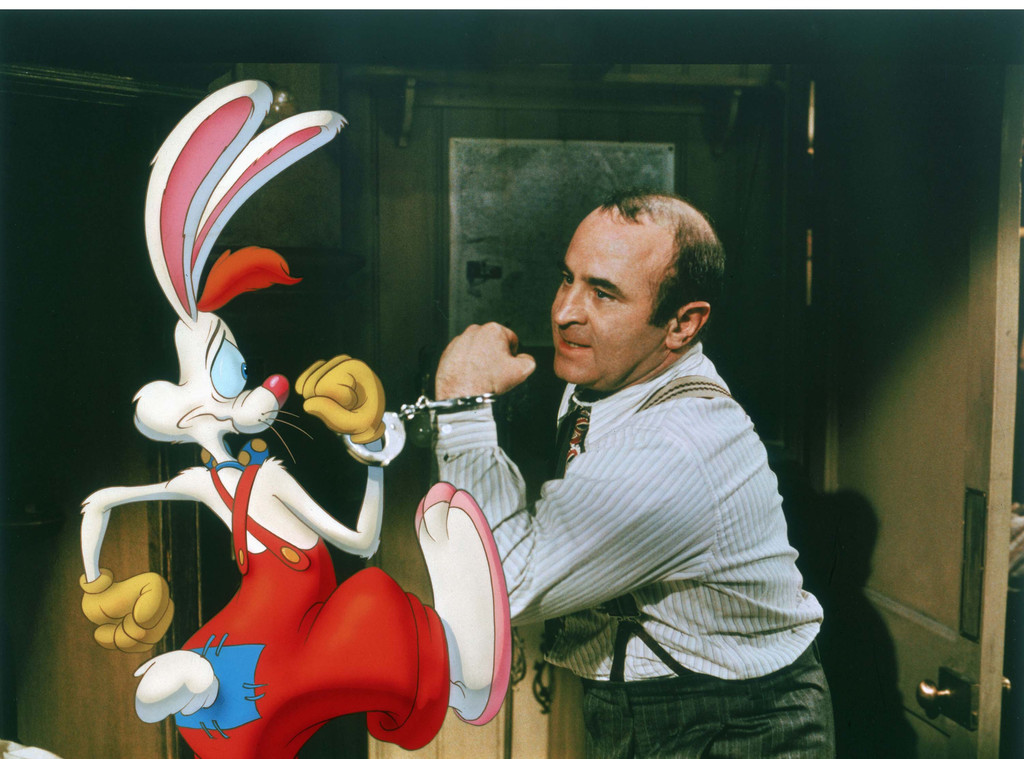
Of course, there's a spectrum of realistic versus cartoonish in every animated show. Animes tend to switch styles based on the seriousness of the topic: think One Punch Man's Saitama when relaxed versus fighting. I think Mumbo Jumbo: The Anime could be a good time, honestly.

As for what the characters themselves would look like, I made a goofy little drawing of Hinkle Von Vampton as I imagined him whenever he was mentioned. He's somewhere between the Duke of Weselton from Frozen and that weird mountain goat dude from Hoodwinked.

Thanks for reading my ramblings!
So how do you mix cartoonish and realistic styles in a movie? One option would be a realistic cartoon like Archer. The character models for Archer were based off of real people, but being animated allows for handy things like grisly death, without real danger to actors or special effects. But the characters aren't really caricatures, and don't change style, making them not quite right for a Mumbo Jumbo.
There's also the style of Who Framed Roger Rabbit (1988). It has a mix of comically animated and live-action characters that bounce off each other and interact in a way that was radically new at the time.
Of course, there's a spectrum of realistic versus cartoonish in every animated show. Animes tend to switch styles based on the seriousness of the topic: think One Punch Man's Saitama when relaxed versus fighting. I think Mumbo Jumbo: The Anime could be a good time, honestly.

As for what the characters themselves would look like, I made a goofy little drawing of Hinkle Von Vampton as I imagined him whenever he was mentioned. He's somewhere between the Duke of Weselton from Frozen and that weird mountain goat dude from Hoodwinked.

Thanks for reading my ramblings!
February 10, 2018
Bias and Butterflies
Bias and lying by omission is the easiest kind to do,
intentionally or not. If no records exist for, say, a certain French peasant
circa 1400, you’d be forgiven for not knowing their life story. But an omniscient
historian with infinite historical knowledge could still tell a biased story by
not writing every single detail into their historical account. An “annal
history” of every single factual event that happened in human history, in chronological
order and with (somehow) no subjective wording would be great. It would also be
a gazillion pages long, and near impossible to use/read. So in order for it to
be usable, you would create condensed versions. And is that French peasant REALLY
important to your “exhaustive history of the American Wild West”? Of course!
Had that French peasant not moved his cart during a rainstorm, a tree would
have fallen on the daughter of a visiting merchant—who, of course, would be the
great x15 grandmother of Buffalo Bill. And what is the Wild West without Buffalo
Bill?
p.s. tell me if my blog is doing that thing where it runs off the side of the page.
You’ve probably heard of the butterfly effect, which says
that a butterfly flapping its wings affects human events far in the future. Maybe
a butterfly flap caused a minute change in weather patterns that would warp
into a tornado that destroyed Rome. If all of human history is interconnected, you
really can’t tell the complete (and therefore not inherently biased) story of one
thing without talking about everything that has ever happened. It’s a little ad
absurdum, but I like thinking about history, and the sheer chance that
everything turned out the way it did because of one little butterfly.
Kind of related to bias by omission is bias by narration. A
king living in his palace knows his life: his surroundings, his food, his
drink, his opinions and ideology. And as the most powerful and influential person
in the area, his knowledge is a reasonable
“history.” Then imagine the scribe of the annals we read in class, who
writes “712. Flood everywhere. / 713. / 714. Pippin, mayor of the palace, died.
/715. 716. 717.” Presumably nothing happened in 713, 715, 716, or 717 that was
of interest to the scribe or to the town of Saint Gall. But what about the
history and story of the 709 hard winter during which Bede the presbyter had a religious
experience, which caused him to become Blessed Bede by the time he died in 731?
(A little bit of a ridiculous example, but made to show how the private lives
of the common people can have a big impact later.) The king and the scribe are
not wrong to say “these things happened and are important.” Bede the presbyter
is not wrong to say “my life happened and is important.” But for the most complete,
unbiased historical account we would need both the history of the common people
and of the king. Of course, we don’t get it because records of kings tend to be
better preserved than those of poor, illiterate peasants.
p.s. tell me if my blog is doing that thing where it runs off the side of the page.
January 26, 2018
Why do Postmodernists Do Weird Things?
During class, we were discussing techniques of postmodernist
writers. I mentioned the tactic of making up artificial constructs and
unbelievable plot points (on this planet yawning is illegal!!! on this planet
all the trees are made of plastic!!) to draw attention to Planet Earth’s own
weird and arbitrary constructs (an idea or theory containing various conceptual elements, typically one considered to be subjective and not based on empirical evidence. Amusingly, the example given is "history is largely an ideological construct."). It occurred to me that
the attention-grabbing is not the only reason to use such devices. For one, the author could be
just poking fun, saying “what if?” Doctorow loves to flaunt this power, telling
us that of course this all happened,
that Ford and Morgan and Houdini and the family and all these people had these
meetings that history never noticed.
A postmodernist author might also just
make unbelievable things up, well, just for the hell of it. And Doctorow does
this a lot (see: Little Boy as God theories, all the chance meetings, tiny
amusing details) but I wanted to bring in a favorite postmodernist sci-fi
author of mine, Douglas Adams. You know, the guy who wrote about all the
dolphins leaving earth before the apocalypse because they’re way smarter than
humans, and decided that their parting words to their favorite marine biologist
would be “So long, and thanks for all the fish.” Hitchhiker’s Guide to the Universe is full of stupid, funny quirks
like that. Think of the swamp planet Squornshellous Zeta, which is home to living mattresses who are "slaughtered, dried out, and shipped around the galaxy to be slept on by grateful customers." source. Or maybe the time a character met Thor, and due to "a rather classless sub-etha video (involving a latex bustier and Damogranian pom-pom squids) ..." making him "the 68th most popular deity in the universe." Agreeing that all kinds of deities are real, then deciding that people would rank them-- How postmodernist is that? (for the curious: the 67th most popular deity is Skaoi, god of snowshoes.)
A more modern equivalent might be Guardians of the Galaxy, which utilizes the same sheer enjoyment of weirdness and eccentricity for entertainment and amusement value. Doctorow's pointed what-ifs don't quite fit into that same class of just-plain-weird current and postmodernist stuff. Somehow, Doctorow takes himself more seriously than someone.
There's a lot more to be said on this topic, and I'd love to be contested in the comments.
January 18, 2018
This is a new blog

Yep. This is now a History as Fiction blog instead of a 20th Century Novel one. Accepting better, punnier new name suggestions in the comments below.
December 20, 2017
Guitar's Revenge, and History in the Making
So in Song of Solomon, Guitar is part of the 7 Days society. You know, the one that revenges white acts of violence on black people by equal and opposite (sorry, Juniors) killings of white people. Notably, its whole thing was secrecy, so we don't know if it actually existed. In any case, Guitar is in charge of Sunday, and it's explicitly stated that what he's working on (and what he needs the inheritance money for) is revenging the Birmingham Church Bombing, which killed four young black girls in 1963.
The reason Guitar is so angry about stuff like this, and the reason he joined the 7 Days society was that nothing was being done. He laments that the people who set the bomb were not persecuted, and he is angry at how little society and the justice system really care about black people. And when Toni Morrison was writing this book pre-1977, still nothing had been done. But those (KKK members!!) did end up being prosecuted, albeit after a series of refusals by the government to look at it.
The bomb went off in 1963. Police knew the names of the four suspects mere days after the attack. In 1965 the FBI sent the names to J. Edgar Hoover, the FBI director. He overruled and blocked it, and the case remained closed until 1971, when Alabama Attorney General William Joseph Baxley II reopened it. Six years(!!) later, (and 14 after the bombing itself, if anyone is counting) the ringleader was sentenced to life in prison (but he was really old and would die 8 years later, at the age of 81.) This puts us at 1977, when Toni Morrison was writing Song of Solomon. From her point of view, and certainly from Guitar's, nothing had been done. Only one of the four violent white supremacists had been imprisoned, and by that point nothing more was going to be done.
Cue 1993 (30 whole years later), when civil rights leaders pressured the justice system enough for it to be brought up again. Rob Langford prosecuted, and U.S. Attorney Doug Jones helped go through the evidence, eventually finding enough usable evidence (from wiretaps, documents, etc) to convict two of the others (the fourth one died without being charged.) One's trial was delayed because he tried to fake a mental illness, but it was seen through. After it was all over, Jones told reporters that "justice delayed does not have to be justice denied.” It was probably pretty delayed for Guitar though.
* And yes, that's the same Doug Jones who just won the senate race in Alabama. Apparently he was a little better than a proven sexual predator, somehow. *
* Another note: I don't like using the bombers' names because I think it gives their names an unworthy place in history, a 15 minutes of fame gone on far too long, for all the wrong reasons. You can tell me if you agree with that or not in the comments.*
The reason Guitar is so angry about stuff like this, and the reason he joined the 7 Days society was that nothing was being done. He laments that the people who set the bomb were not persecuted, and he is angry at how little society and the justice system really care about black people. And when Toni Morrison was writing this book pre-1977, still nothing had been done. But those (KKK members!!) did end up being prosecuted, albeit after a series of refusals by the government to look at it.
The bomb went off in 1963. Police knew the names of the four suspects mere days after the attack. In 1965 the FBI sent the names to J. Edgar Hoover, the FBI director. He overruled and blocked it, and the case remained closed until 1971, when Alabama Attorney General William Joseph Baxley II reopened it. Six years(!!) later, (and 14 after the bombing itself, if anyone is counting) the ringleader was sentenced to life in prison (but he was really old and would die 8 years later, at the age of 81.) This puts us at 1977, when Toni Morrison was writing Song of Solomon. From her point of view, and certainly from Guitar's, nothing had been done. Only one of the four violent white supremacists had been imprisoned, and by that point nothing more was going to be done.
Cue 1993 (30 whole years later), when civil rights leaders pressured the justice system enough for it to be brought up again. Rob Langford prosecuted, and U.S. Attorney Doug Jones helped go through the evidence, eventually finding enough usable evidence (from wiretaps, documents, etc) to convict two of the others (the fourth one died without being charged.) One's trial was delayed because he tried to fake a mental illness, but it was seen through. After it was all over, Jones told reporters that "justice delayed does not have to be justice denied.” It was probably pretty delayed for Guitar though.
* And yes, that's the same Doug Jones who just won the senate race in Alabama. Apparently he was a little better than a proven sexual predator, somehow. *
* Another note: I don't like using the bombers' names because I think it gives their names an unworthy place in history, a 15 minutes of fame gone on far too long, for all the wrong reasons. You can tell me if you agree with that or not in the comments.*
November 27, 2017
Google Translate Takes Camus: L'étranger en anglais
See, when I thought of this post, I thought I'd be finding humor in a terrible translation of The Stranger. What I found was a surprisingly, disappointingly normal first couple of pages. A few pronouns are off, but I found no big errors, except for "Bière," which can translate to "coffin" or "beer." So they kept vigil over Maman's beer. Thanks, Meursault. I suppose the straightforward language of Camus lends itself better to Google's simplistic translations.
My pitiful little translation can be found here.
* * *
For a little more funny and less literary kick, here's the first paragraph put through a Bad Translator...
"Today, my mother died. Or maybe yesterday, I do not know. I received a telegram from the refugee hospital: "My mother died.We are buried tomorrow.Try feeling.It does not mean anything.It may be yesterday."
My pitiful little translation can be found here.
* * *
For a little more funny and less literary kick, here's the first paragraph put through a Bad Translator...
"Today, my mother died. Or maybe yesterday, I do not know. I received a telegram from the refugee hospital: "My mother died.We are buried tomorrow.Try feeling.It does not mean anything.It may be yesterday."
Does Anyone Look at Posts That Aren't on Mr. Mitchell's Blog? Anyway, here's the translation of the first few pages of Camus' /The Stranger/, trans. Google Translate.
Wow, I'm flattered.You clicked the links on a blog post?? You deserve this. Sentence (fragments) that are exactly the same as in Ward's Translation are bolded. Humorously clunky parts are underlined.
Today, my mother is dead. Or maybe yesterday, I do not know. I received a telegram from the asylum: "Mother deceased. Burial tomorrow. Sentiments distinguished. " It does not mean anything. Maybe it was yesterday.
The old people's asylum is at Marengo, eighty kilometers from Algiers. I will take the bus at two o'clock and I will arrive in the afternoon. So, I will be able to watch and I will return tomorrow night. I asked my boss for two days off and he could not refuse them with such excuse. But he did not look happy. I even told him, "It's not my fault. " He did not answer. I thought then that I should not have told him that. In short, I did not have to apologize. It was rather his turn to offer his condolences. But he will probably do so the day after tomorrow when he sees me in mourning. For the moment, it's a bit like mom was not dead. After the funeral, on the contrary, it will be a classified case and all will have a more official look.
I took the bus at two o'clock. It was very hot. I ate at the restaurant, at Céleste's, as usual. They all had a lot of trouble for me and Céleste told me, "We only have one mother. When I left, they accompanied me to the door. I was a little dizzy because I had to go up to Emmanuel to borrow a black tie and an armband. He lost his uncle a few months ago.
I ran so as not to miss the start. This haste, this race is because of all this, no doubt, added to the bumps, the smell of gasoline, the reverberation of the road and the sky, that I dozed off. I slept most of the way. And when I woke up, I was crushed against a soldier who smiled at me and asked me if I came from far away. I said "yes" so I did not have to talk anymore.
The asylum is two kilometers from the village. I made the walk. I wanted to see Mom right away. But the concierge told me that I had to meet the director. As he was busy, I waited a bit. All the while, the concierge spoke and then I saw the manager: he received me in his office. He was a little old man, with the Legion of Honor. He looked at me with his clear eyes. Then he shook my hand that he kept so long that I did not know how to remove it. He looked at a file and said, "Mrs. Meursault came here three years ago. You were his only support. I thought he was reproaching me for something and I started explaining to him. But he interrupted me: "You do not have to justify yourself, my dear child. I read your mother's file. You could not support himself. He needed a guard. Your salaries are modest. And all things considered, she was happier here. I said, "Yes, Mr. Director. He added, "You know, she had friends, people her age. She could share with them interests that are from another time. You are young and she must be bored with you."
It was true. When she was home, Mom was always following me with her eyes silently. In the first days she was in the asylum, she often cried. But it was because of the habit. After a few months, she would have cried if she had been removed from the asylum. Always because of habit. It's a bit of a fact that in the last year I've hardly been there. And also because it took me on a Sunday - not to mention the effort to get to the bus, get tickets and drive two hours.
The director talked to me again. But I hardly listened to him anymore. Then he said to me, "I guess you want to see your mother. I got up without saying anything and he preceded me to the door. On the stairs, he explained: "We took her to our little morgue. To not mischief others. Each time a resident dies, the others are nervous for two or three days. And it makes the service difficult. We crossed a courtyard where there were many old men, chatting in small groups. They were silent when we passed. And behind us, the conversations resumed. It looked like a muffled chatter of parakeets. At the door of a small building, the director left me: "I leave you, Mr. Meursault. I am at your disposal in my office. In principle, the burial is fixed at ten o'clock in the morning. We thought that you will be able to look after the disappeared. One last word: your mother has, it seems, often expressed to her companions the desire to be buried religiously. I took on myself, to do the necessary. But I wanted to inform you. " I thanked him. Mom, without being an atheist, had never thought of living religion.
I entered. It was a very bright room, whitewashed and covered with a glass roof. It was furnished with X-shaped chairs and easels. Two of them in the center supported a beer covered with a lid. Only gleaming screws, scarcely sunk, could be seen coming off the planks of walnut. Near the beer, there was an Arab nurse in white coats, a brightly colored scarf on her head.
At that moment, the concierge came in behind my back. He must have run. He stammered a little: "We've covered it, but I have to unscrew the beer so you can see it. He was approaching the beer when I stopped him. He said to me, "You do not want to? I replied, "No. He stopped and I was embarrassed because I felt that I should not have said that. After a while, he looked at me and he asked me, "Why? But without hesitation, as if he were inquiring. I said, "I do not know. Then, twisting his white mustache, he said without looking at me: "I understand. He had beautiful eyes, light blue, and a slightly red complexion. He gave me a chair and he himself sat a little behind me. The guard it's a nurse got up and headed for the exit. At that moment, the concierge told me, "It's a chancre she has. As I did not understand, I looked at the nurse and saw that she was wearing a blindfold around her head. At the height of the nose, the headband was flat. Only the whiteness of the blindfold was visible in his face.
When she left, the concierge spoke, "I'll leave you alone. I do not know what I did, but he stayed behind me. This presence in my back bothered me. The room was full of beautiful late afternoon [sun]light. Two hornets were buzzing against the glass roof. And I felt sleep winning me. I said to the concierge, without turning to him: "Have you been there a long time? Immediately he replied, "Five years" - as if he had waited for my request forever.
Then he chatted a lot. He would have been astonished to say that he would end up as a caretaker at the Marengo asylum. He was sixty-four years old and he was Parisian. At that moment I interrupted him: "Ah, you are not from here? Then I remembered that before I went to the director's office he had told me about Mom. He had told me that he had to be buried very quickly, because in the plain it was hot, especially in this country. It was then that he had taught me that he had lived in Paris and that he could hardly forget it. In Paris, one stays with the dead three or four days sometimes. Here we do not have time, we did not realize that already we have to run behind the hearse. His wife had said to him then: "Shut up, these are not things to tell to Monsieur. The old man had blushed and apologized. I intervened to say, "No, no. But no. I thought what he was saying was right and interesting.
Today, my mother is dead. Or maybe yesterday, I do not know. I received a telegram from the asylum: "Mother deceased. Burial tomorrow. Sentiments distinguished. " It does not mean anything. Maybe it was yesterday.
The old people's asylum is at Marengo, eighty kilometers from Algiers. I will take the bus at two o'clock and I will arrive in the afternoon. So, I will be able to watch and I will return tomorrow night. I asked my boss for two days off and he could not refuse them with such excuse. But he did not look happy. I even told him, "It's not my fault. " He did not answer. I thought then that I should not have told him that. In short, I did not have to apologize. It was rather his turn to offer his condolences. But he will probably do so the day after tomorrow when he sees me in mourning. For the moment, it's a bit like mom was not dead. After the funeral, on the contrary, it will be a classified case and all will have a more official look.
I took the bus at two o'clock. It was very hot. I ate at the restaurant, at Céleste's, as usual. They all had a lot of trouble for me and Céleste told me, "We only have one mother. When I left, they accompanied me to the door. I was a little dizzy because I had to go up to Emmanuel to borrow a black tie and an armband. He lost his uncle a few months ago.
I ran so as not to miss the start. This haste, this race is because of all this, no doubt, added to the bumps, the smell of gasoline, the reverberation of the road and the sky, that I dozed off. I slept most of the way. And when I woke up, I was crushed against a soldier who smiled at me and asked me if I came from far away. I said "yes" so I did not have to talk anymore.
The asylum is two kilometers from the village. I made the walk. I wanted to see Mom right away. But the concierge told me that I had to meet the director. As he was busy, I waited a bit. All the while, the concierge spoke and then I saw the manager: he received me in his office. He was a little old man, with the Legion of Honor. He looked at me with his clear eyes. Then he shook my hand that he kept so long that I did not know how to remove it. He looked at a file and said, "Mrs. Meursault came here three years ago. You were his only support. I thought he was reproaching me for something and I started explaining to him. But he interrupted me: "You do not have to justify yourself, my dear child. I read your mother's file. You could not support himself. He needed a guard. Your salaries are modest. And all things considered, she was happier here. I said, "Yes, Mr. Director. He added, "You know, she had friends, people her age. She could share with them interests that are from another time. You are young and she must be bored with you."
It was true. When she was home, Mom was always following me with her eyes silently. In the first days she was in the asylum, she often cried. But it was because of the habit. After a few months, she would have cried if she had been removed from the asylum. Always because of habit. It's a bit of a fact that in the last year I've hardly been there. And also because it took me on a Sunday - not to mention the effort to get to the bus, get tickets and drive two hours.
The director talked to me again. But I hardly listened to him anymore. Then he said to me, "I guess you want to see your mother. I got up without saying anything and he preceded me to the door. On the stairs, he explained: "We took her to our little morgue. To not mischief others. Each time a resident dies, the others are nervous for two or three days. And it makes the service difficult. We crossed a courtyard where there were many old men, chatting in small groups. They were silent when we passed. And behind us, the conversations resumed. It looked like a muffled chatter of parakeets. At the door of a small building, the director left me: "I leave you, Mr. Meursault. I am at your disposal in my office. In principle, the burial is fixed at ten o'clock in the morning. We thought that you will be able to look after the disappeared. One last word: your mother has, it seems, often expressed to her companions the desire to be buried religiously. I took on myself, to do the necessary. But I wanted to inform you. " I thanked him. Mom, without being an atheist, had never thought of living religion.
I entered. It was a very bright room, whitewashed and covered with a glass roof. It was furnished with X-shaped chairs and easels. Two of them in the center supported a beer covered with a lid. Only gleaming screws, scarcely sunk, could be seen coming off the planks of walnut. Near the beer, there was an Arab nurse in white coats, a brightly colored scarf on her head.
At that moment, the concierge came in behind my back. He must have run. He stammered a little: "We've covered it, but I have to unscrew the beer so you can see it. He was approaching the beer when I stopped him. He said to me, "You do not want to? I replied, "No. He stopped and I was embarrassed because I felt that I should not have said that. After a while, he looked at me and he asked me, "Why? But without hesitation, as if he were inquiring. I said, "I do not know. Then, twisting his white mustache, he said without looking at me: "I understand. He had beautiful eyes, light blue, and a slightly red complexion. He gave me a chair and he himself sat a little behind me. The guard it's a nurse got up and headed for the exit. At that moment, the concierge told me, "It's a chancre she has. As I did not understand, I looked at the nurse and saw that she was wearing a blindfold around her head. At the height of the nose, the headband was flat. Only the whiteness of the blindfold was visible in his face.
When she left, the concierge spoke, "I'll leave you alone. I do not know what I did, but he stayed behind me. This presence in my back bothered me. The room was full of beautiful late afternoon [sun]light. Two hornets were buzzing against the glass roof. And I felt sleep winning me. I said to the concierge, without turning to him: "Have you been there a long time? Immediately he replied, "Five years" - as if he had waited for my request forever.
Then he chatted a lot. He would have been astonished to say that he would end up as a caretaker at the Marengo asylum. He was sixty-four years old and he was Parisian. At that moment I interrupted him: "Ah, you are not from here? Then I remembered that before I went to the director's office he had told me about Mom. He had told me that he had to be buried very quickly, because in the plain it was hot, especially in this country. It was then that he had taught me that he had lived in Paris and that he could hardly forget it. In Paris, one stays with the dead three or four days sometimes. Here we do not have time, we did not realize that already we have to run behind the hearse. His wife had said to him then: "Shut up, these are not things to tell to Monsieur. The old man had blushed and apologized. I intervened to say, "No, no. But no. I thought what he was saying was right and interesting.
Subscribe to:
Posts (Atom)