April 6, 2018

Magic Tree House: The Other Time-Traveling Observers

I realized this week that I had seen the time-traveling dynamics of Kindred before. In Magic Tree House, wholesome white 8-and-7-year-old protagonists Jack and Annie are summoned to their tree house when there's a mission to be done. They frequently get to their new time period just in time to save someone, and only go back once their "mission" is finished (not when they're in mortal danger, like Dana.) They are in a similar situation to Dana, although 1) they sometimes have other missions than saving someone and 2) they never go to the same place more than once for a mission.

As for being observers, their position is complicated. First off, they can take things with them both ways when they go on treehouse trips. Second, unlike Dana they can do some magic (to help Da Vinci's machine fly, inspire The Magic Flute, etc.) Third: some of the historical missions have a basis in history but little effect on it; they meet real historical figures mixed with convenient fictitious ones. I seem to remember Jack (the one who researches everything before and after they go, in order to sneakily teach readers something) finding a poem/document from someone they met that describes the two kids, meaning they made a mark on the historical record. But as we discussed in class, metaphorically it doesn't really matter. Fourth, it's canonical that their clothes and language change in order to fit in wherever they are, and we can see that in the cover illustrations; however, we don't see their race change, and it might take more than wardrobe for two white kids to fit in when they go to, say, Qin dynasty China. (to be fair, changing race would probably be more problematic.) They do their mission and leave, so individual missions don't have as much effect on them as Dana's. Finally, in keeping with the whole "3rd-5th grade reading level" thing the kids don't see anything remotely traumatizing like the race violence Dana sees and experiences.

 I drudged through the Wikipedia page to see if Jack and Annie ever actually did go to the reconstruction/antebellum South. I suspected they didn't, and I was right. They approach the time period when they go out west (like Kevin wanted to, neatly avoiding the nasty stuff going down in the South. They meet a nice white cowboy named Slim, and no black people if I remember correctly!)  They go to the Civil War, and the only mentioned characters they interact with are white. (If I had the book I would do further research. Maybe to be continued on my next post?) Many of the American-history stories are pretty okay even though parts are definitely sugarcoated and simplified for younger readers. Thanksgiving on Thursday gives a pretty realistic retelling of the first Thanksgiving, with minimal Pilgrim-Wampanoag buddy-buddyism. Blizzard of the Blue Moon, set during the Depression, doesn't focus on the depression as much as finding a unicorn. Yes, really.

It turns out, someone already wrote their Educational Studies thesis on the historical inaccuracies of the books, and why it's almost as important to give kids a gut-level link to those time periods through someone their own age. I personally find the results a little off, seeing as the author of the thesis "collected a total of 86 facts" from 28 books (seems a little small, for the supposedly historically immersive books) and at least partially verified 62 of those facts only through the World Book Encyclopedia 2010.

But back to Kindred: what if Magic Tree House decided to take Jack and Annie on an eye-opening, probably traumatizing romp to the Weylin plantation? Well, seeing as the two didn't hang with the slaves when they went to Pompeii (Book #13) or the civil war (Book #21), or with the lowest class at any time of racial/class divide, they would probably find themselves living with the Weylins, become friends with Rufus and spend a lot of time inside the house.They might meet Nigel or Alice in a nice, pleasant way. If Mary Pope Osborne were feeling rated-R Jack and Annie might watch a whipping or walk through the slave quarters, or maybe see them working in the field.

Now, I totally haven't done as much research as Octavia Butler on what would really happen. But we see in the book that Kevin is (obviously) treated differently than Dana is on the plantation, and sees different aspects while completely missing others. We can only assume that Annie and Jack would be the same, and would, like Kevin, get a warped view because of it.

This book would never happen, but there are some interesting ties to stuff we've seen before: Mumbo-Jumbo-Atonistically declaring a certain narrative "the truth," and putting characters in that narrative to teach kids "History," or Kindred's putting historians literally into the story to create more visceral truth, and how when you're actually participating in the story, you can't just be an observer, black or white.

March 18, 2018

Humor, Mental Blocks, and Billy Pilgrim


The character of Billy Pilgrim brings to mind my much-earlier blog post trying to deal with Why Postmodernists Do Weird Things. You would think Vonnegut is much more in the “for-the-hell-of-it” camp with this one, what with the plunger-shaped Tralfamadorian aliens during what is ostensibly a war memoir, or the tasteful drawing of Montana Wildhack’s locket at the end. In research for this post, I found a great Vonnegut quote; he says that his books “are essentially mosaics made up of a whole bunch of little chips… and each chip is a joke.” And yet, we discussed in class how humor and defamiliarization are an escape. World War II seems much different when you call it artificial weather or focus on the squishing, farting humans or just laugh at the sheer absurdity of this guy who ends up in a curtain toga during the apocalyptic bombing of a German city. Vonnegut’s creation of Billy Pilgrim and the ridiculous plot he stars in is a coping mechanism and a symbol for the war itself.

First: Billy is the ultimate veteran as someone who is constantly with his war days. At one point Billy doesn’t go back but just remembers (and this is emphasized in the book too, that he is remembering) his time as a soldier, and that he had never done that before. The Tralfamadorian time-jumps lend a sort of dreamlike quality to the book, and the remembering makes Billy seem a little more conscious in his storyline. (Something, I suppose, Tralfamadorians would laugh at. What does it matter to look “back,” if what will happen will happen anyway? Relatedly, does this make Billy a pillar of salt like Lot’s wife?)

Second: We mentioned in class how circuitous the path to the bombing really is. In chapter one Vonnegut sits us down and says “this book is about the bombing of Dresden.” Then he keeps saying, “the bombing will happen soon.” Then, right before the bombing, he goes on a series of about five related time-skips involving Campbell, Montana, and his wife, among other things. Not only does this take a page out of the Tralfamadorian novel handbook, showing many related scenes in succession to create a specific feeling, it also gives a good idea of the mental hurdles a veteran would have to overcome to talk about his experience. Valencia asks Billy about the war and he sprints to the bathroom. Then he’s talking to Montana Wildhack and is able to talk about the war. Since Billy doesn’t really have a sense of time, it’s not time that made him more comfortable with Montana. I think the sheer ridiculousness of being on an alien planet, in a human exhibit with an adult film star that said aliens inexplicably decided would be the best other human for the job, with her, baby on hip, sympathetically asking you about the war—it detaches Billy just enough from real life for him to be able to talk more openly about the war. Compare this to Valencia and Billy’s lackluster, very real-world marriage. It’s the difference between a dream and reality, almost. And wouldn’t you feel more comfortable doing something strange and out of the ordinary in a dream, rather than in real life? (e.g. you’re dreaming about a test, and you get an urge to yell as loud as you can. You do, and nobody notices. The next day you’re taking your test and you wonder what would happen if you yelled. But you don’t.) And after Billy tells Montana about Dresden, we finally see it happen in the narration. In my opinion, this is solid proof of both Kurt Vonnegut’s own mental blocks and the use of defamiliarization and humor to get past them.

March 2, 2018

Cartoonishness

We devoted a fair amount of class discussion to Mumbo Jumbo as a movie or cartoon. The problem, of course, arose from how caricatured the characters should be. At some points the novel seems almost like it takes itself seriously, setting a more realistic mood for our proverbial movie. Then something ridiculous and silly will happen, or some character is an unrealistic caricature, and we need something more emotive and expressive than real life. Some things are portrayed the same way throughout the book, and others use that code-switching humor my panel presentation group discussed (i.e. using a weird shift in language to throw you off guard and make you think, also putting language in juxtaposition. Reed uses this a lot, shifting from Black vernacular English to "formal" english even when it doesn't make a lot of sense to do so, such as the Wallflower Order's inexplicable proclamation to “Knock It Dock It Co-opt It Swing It Bop It or Rock It!” p. 118.)


So how do you mix cartoonish and realistic styles in a movie? One option would be a realistic cartoon like Archer. The character models for Archer were based off of real people, but being animated allows for handy things like grisly death, without real danger to actors or special effects. But the characters aren't really caricatures, and don't change style, making them not quite right for a Mumbo Jumbo.

Image result for archer


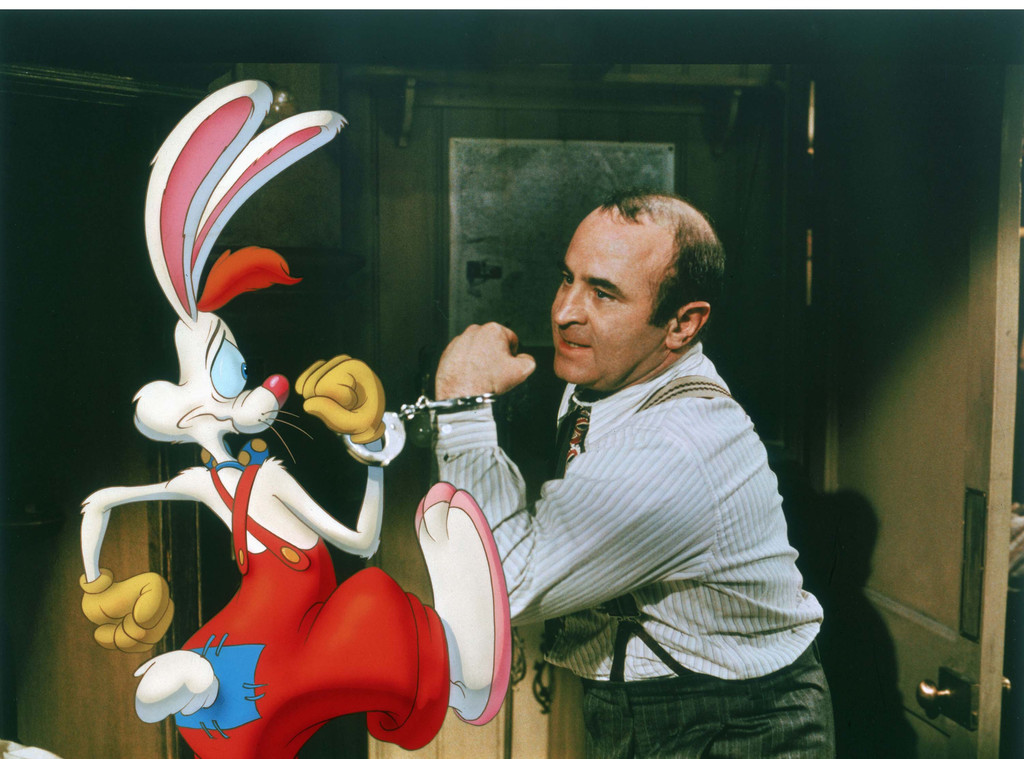
There's also the style of Who Framed Roger Rabbit (1988). It has a mix of comically animated and live-action characters that bounce off each other and interact in a way that was radically new at the time.
Image result for who framed roger rabbit


Of course, there's a spectrum of realistic versus cartoonish in every animated show. Animes tend to switch styles based on the seriousness of the topic: think One Punch Man's Saitama when relaxed versus fighting. I think Mumbo Jumbo: The Anime could be a good time, honestly.


As for what the characters themselves would look like, I made a goofy little drawing of Hinkle Von Vampton as I imagined him whenever he was mentioned. He's somewhere between the Duke of Weselton from Frozen and that weird mountain goat dude from Hoodwinked.


Thanks for reading my ramblings!

February 10, 2018

Bias and Butterflies

Bias and lying by omission is the easiest kind to do, intentionally or not. If no records exist for, say, a certain French peasant circa 1400, you’d be forgiven for not knowing their life story. But an omniscient historian with infinite historical knowledge could still tell a biased story by not writing every single detail into their historical account. An “annal history” of every single factual event that happened in human history, in chronological order and with (somehow) no subjective wording would be great. It would also be a gazillion pages long, and near impossible to use/read. So in order for it to be usable, you would create condensed versions. And is that French peasant REALLY important to your “exhaustive history of the American Wild West”? Of course! Had that French peasant not moved his cart during a rainstorm, a tree would have fallen on the daughter of a visiting merchant—who, of course, would be the great x15 grandmother of Buffalo Bill. And what is the Wild West without Buffalo Bill?

You’ve probably heard of the butterfly effect, which says that a butterfly flapping its wings affects human events far in the future. Maybe a butterfly flap caused a minute change in weather patterns that would warp into a tornado that destroyed Rome. If all of human history is interconnected, you really can’t tell the complete (and therefore not inherently biased) story of one thing without talking about everything that has ever happened. It’s a little ad absurdum, but I like thinking about history, and the sheer chance that everything turned out the way it did because of one little butterfly.


Kind of related to bias by omission is bias by narration. A king living in his palace knows his life: his surroundings, his food, his drink, his opinions and ideology. And as the most powerful and influential person in the area, his knowledge is a reasonable  “history.” Then imagine the scribe of the annals we read in class, who writes “712. Flood everywhere. / 713. / 714. Pippin, mayor of the palace, died. /715. 716. 717.” Presumably nothing happened in 713, 715, 716, or 717 that was of interest to the scribe or to the town of Saint Gall. But what about the history and story of the 709 hard winter during which Bede the presbyter had a religious experience, which caused him to become Blessed Bede by the time he died in 731? (A little bit of a ridiculous example, but made to show how the private lives of the common people can have a big impact later.) The king and the scribe are not wrong to say “these things happened and are important.” Bede the presbyter is not wrong to say “my life happened and is important.” But for the most complete, unbiased historical account we would need both the history of the common people and of the king. Of course, we don’t get it because records of kings tend to be better preserved than those of poor, illiterate peasants.

p.s. tell me if my blog is doing that thing where it runs off the side of the page. 

January 26, 2018

Why do Postmodernists Do Weird Things?


During class, we were discussing techniques of postmodernist writers. I mentioned the tactic of making up artificial constructs and unbelievable plot points (on this planet yawning is illegal!!! on this planet all the trees are made of plastic!!) to draw attention to Planet Earth’s own weird and arbitrary constructs (an idea or theory containing various conceptual elements, typically one considered to be subjective and not based on empirical evidence. Amusingly, the example given is "history is largely an ideological construct."). It occurred to me that the attention-grabbing is not the only reason to use such devices. For one, the author could be just poking fun, saying “what if?” Doctorow loves to flaunt this power, telling us that of course this all happened, that Ford and Morgan and Houdini and the family and all these people had these meetings that history never noticed. 

A postmodernist author might also just make unbelievable things up, well, just for the hell of it. And Doctorow does this a lot (see: Little Boy as God theories, all the chance meetings, tiny amusing details) but I wanted to bring in a favorite postmodernist sci-fi author of mine, Douglas Adams. You know, the guy who wrote about all the dolphins leaving earth before the apocalypse because they’re way smarter than humans, and decided that their parting words to their favorite marine biologist would be “So long, and thanks for all the fish.” Hitchhiker’s Guide to the Universe is full of stupid, funny quirks like that. Think of the swamp planet Squornshellous Zeta, which is home to living mattresses who are "slaughtered, dried out, and shipped around the galaxy to be slept on by grateful customers." source. Or maybe the time a character met Thor, and due to "a rather classless sub-etha video (involving a latex bustier and Damogranian pom-pom squids) ..." making him "the 68th most popular deity in the universe." Agreeing that all kinds of deities are real, then deciding that people would rank them-- How postmodernist is that? (for the curious: the 67th most popular deity is Skaoi, god of snowshoes.)

A more modern equivalent might be Guardians of the Galaxy, which utilizes the same sheer enjoyment of weirdness and eccentricity for entertainment and amusement value. Doctorow's pointed what-ifs don't quite fit into that same class of just-plain-weird current and postmodernist stuff. Somehow, Doctorow takes himself more seriously than someone.

There's a lot more to be said on this topic, and I'd love to be contested in the comments.


January 18, 2018

This is a new blog

Yep. This is now a History as Fiction blog instead of a 20th Century Novel one. Accepting better, punnier new name suggestions in the comments below.

December 20, 2017

Guitar's Revenge, and History in the Making

So in Song of Solomon, Guitar is part of the 7 Days society. You know, the one that revenges white acts of violence on black people by equal and opposite (sorry, Juniors) killings of white people. Notably, its whole thing was secrecy, so we don't know if it actually existed. In any case, Guitar is in charge of Sunday, and it's explicitly stated that what he's working on (and what he needs the inheritance money for) is revenging the Birmingham Church Bombing, which killed four young black girls in 1963.

The reason Guitar is so angry about stuff like this, and the reason he joined the 7 Days society was that nothing was being done. He laments that the people who set the bomb were not persecuted, and he is angry at how little society and the justice system really care about black people. And when Toni Morrison was writing this book pre-1977, still nothing had been done. But those (KKK members!!) did end up being prosecuted, albeit after a series of refusals by the government to look at it.

The bomb went off in 1963. Police knew the names of the four suspects mere days after the attack. In 1965 the FBI sent the names to J. Edgar Hoover, the FBI director. He overruled and blocked it, and the case remained closed until 1971, when Alabama Attorney General William Joseph Baxley II reopened it. Six years(!!) later, (and 14 after the bombing itself, if anyone is counting) the ringleader was sentenced to life in prison (but he was really old and would die 8 years later, at the age of 81.) This puts us at 1977, when Toni Morrison was writing Song of Solomon. From her point of view, and certainly from Guitar's, nothing had been done. Only one of the four violent white supremacists had been imprisoned, and by that point nothing more was going to be done.

Cue 1993 (30 whole years later), when civil rights leaders pressured the justice system enough for it to be brought up again. Rob Langford prosecuted, and U.S. Attorney Doug Jones helped go through the evidence, eventually finding enough usable evidence (from wiretaps, documents, etc) to convict two of the others (the fourth one died without being charged.) One's trial was delayed because he tried to fake a mental illness, but it was seen through. After it was all over, Jones told reporters that "justice delayed does not have to be justice denied.” It was probably pretty delayed for Guitar though.

* And yes, that's the same Doug Jones who just won the senate race in Alabama. Apparently he was a little better than a proven sexual predator, somehow. *

* Another note: I don't like using the bombers' names because I think it gives their names an unworthy place in history, a 15 minutes of fame gone on far too long, for all the wrong reasons. You can tell me if you agree with that or not in the comments.*